
Understanding Halal in China
What Does 清真 Mean in Shanghai?
What the Chinese word 清真 means for Muslim travellers in Shanghai, and why RIHLO does not treat every Qingzhen sign as the same as an international Halal certificate.
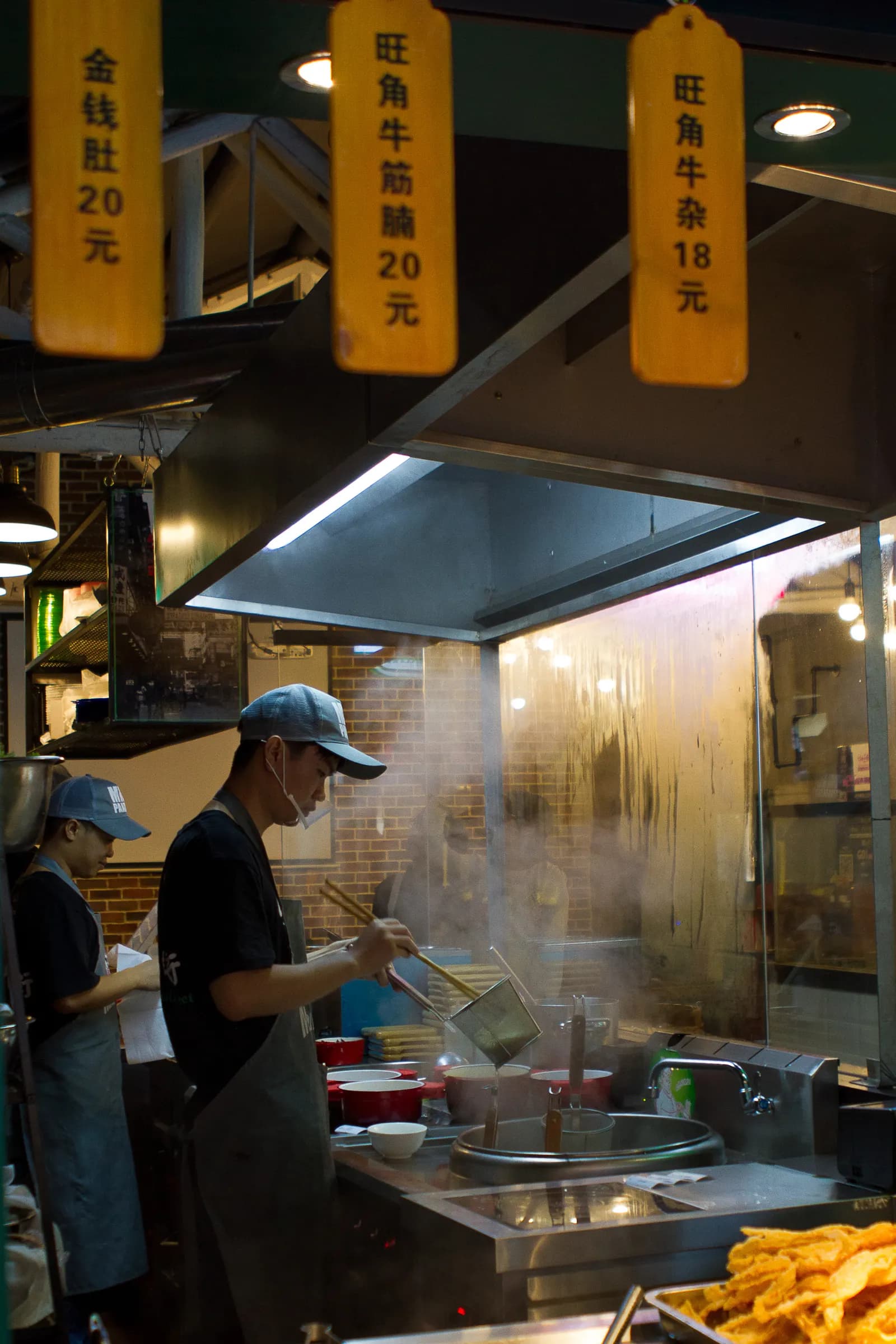
If you are Muslim and travelling in China, two Chinese characters are worth learning:
清真
Pronounced qīngzhēn.
You will often see them on restaurants, noodle shops and food businesses associated with Muslim dietary practice.
Why the sign matters
Shanghai has published rules specifically governing Qingzhen food businesses. The rules cover requirements such as ingredients, handling, dedicated equipment/areas and the use of 清真 wording and signage.
So the term is not just a decorative translation used by tourists.
Why RIHLO still asks for more context
International travellers often come from countries where “Halal certified” usually means a named certification organisation has issued a certificate to a product, facility or business.
That is not always the same framework used in a local Chinese restaurant.
Therefore RIHLO does not automatically convert:
清真 sign → internationally certified Halal
Instead, we record the strongest evidence we can find.
RIHLO evidence labels
Certified
A named certification source and supporting evidence can be verified.
Merchant Confirmed
The merchant has directly confirmed relevant dietary or operating information.
Publicly Reported
A current credible source describes the business as Halal / Qingzhen / Muslim-friendly, but direct evidence remains incomplete.
Verification Pending
We have not found enough evidence for a confident public claim.
Useful questions
请问,这是清真的吗?
Qǐngwèn, zhè shì qīngzhēn de ma?
Is this Qingzhen / Halal?
For stricter requirements, ask about:
- 猪肉 / pork
- 猪油 / lard
- 料酒 / cooking wine
- shared kitchen
- shared fryer
- utensils
- meat sourcing
What about vegetarian food?
Vegetarian does not automatically answer questions about shared fryers, lard, cooking wine or kitchen separation.
If those issues matter to you, ask.
Bottom line
For travellers, 清真 is a useful and meaningful local signal — but context still matters.
RIHLO’s job is not to issue a religious ruling. Our job is to make the evidence and limitations clearer.
Sources reviewed
- Shanghai Municipal Ethnic and Religious Affairs Bureau — Shanghai Qingzhen food regulation.
- State Administration for Market Regulation — current food-labelling rules used as general context for truthful food claims.
Continue reading
Related Guides
Practical Travel
Muslim-Friendly Shanghai: A First-Time Guide for 2026
Food labels, prayer planning, the Old City and airport guidance for a clearer first visit.
with current access notes
Prayer
Where to Pray in Shanghai: Start with Xiaotaoyuan Mosque
A practical prayer-planning guide with a transparent note on current access information.
Understanding Halal
Halal Certified vs Muslim-Friendly: How RIHLO Labels Information
A plain-English guide to RIHLO’s four evidence labels and their limits.